


Understanding the Unique NC Real Estate Closing Framework
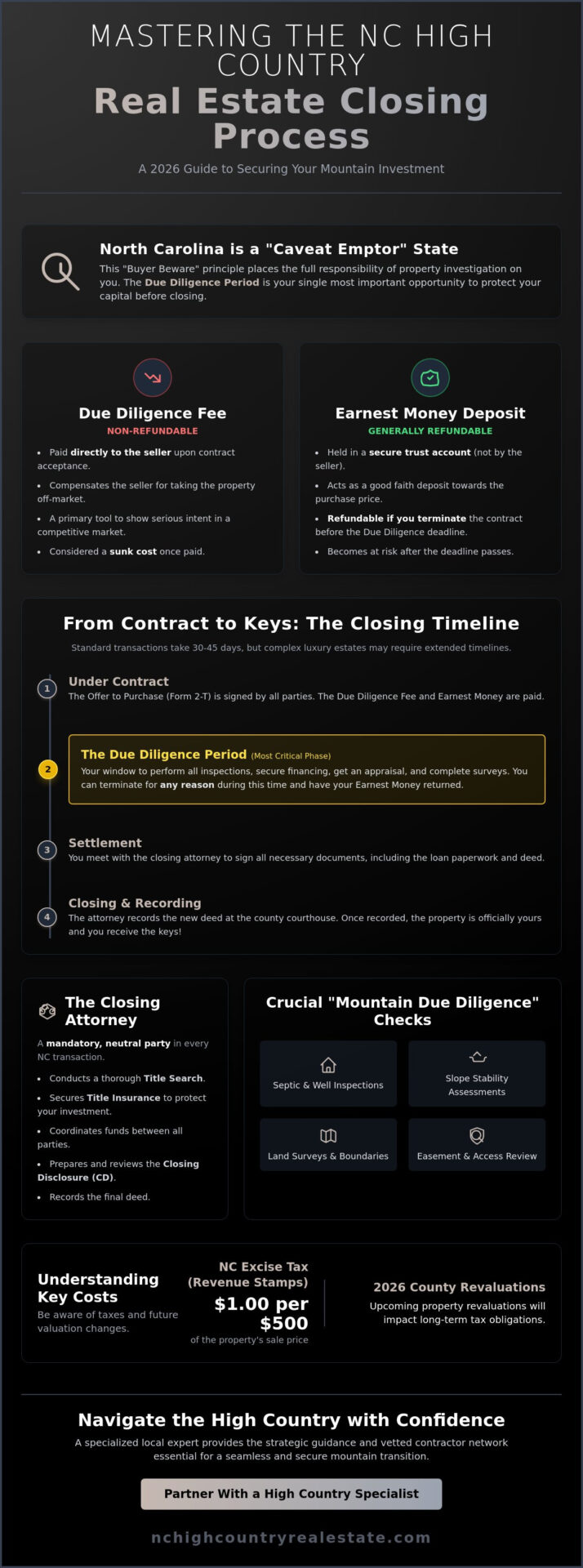
The North Carolina real estate closing process can be a significant departure for buyers accustomed to escrow-based systems. As a “Buyer Beware” or Caveat Emptor state, the burden of discovery falls squarely on the buyer. This principle is embedded in the state’s standard contract, the Offer to Purchase and Contract (Form 2-T), a document that dictates the terms of engagement and sets the stage for a unique two-check system that defines the transaction.
Unlike states where a single escrow deposit is held by a neutral third party, North Carolina utilizes a dual-deposit structure: the Due Diligence Fee and the Earnest Money Deposit. Understanding this distinction is the first and most critical step in successfully navigating the path to owning a High Country property in 2026.
The Due Diligence Fee vs. Earnest Money
- The Due Diligence Fee: This is a non-refundable fee paid directly to the seller upon signing the contract. It essentially purchases the buyer’s right to conduct inspections and, if necessary, terminate the contract for any reason—or no reason at all—prior to the end of the agreed-upon Due Diligence Period. The amount is highly negotiable and serves as compensation to the seller for taking their home off the market.
- The Earnest Money Deposit: This is a good-faith deposit held in a trust account, typically by the real estate brokerage or closing attorney. It is refundable to the buyer if they terminate the contract before the Due Diligence Period expires. If the buyer proceeds with the purchase, both the Earnest Money and the Due Diligence Fee are credited toward the purchase price at closing.
In essence, the Due Diligence Period is the buyer’s “get out of jail free” card, but it comes at a price.
Timeline Expectations for High Country Transactions
- In the competitive Boone and Blowing Rock markets, a typical due diligence period can range from 21 to 30 days, providing a window for inspections, appraisals, and loan approval.
- The standard 30-45 day closing window can be significantly extended for complex luxury properties. Factors like extensive acreage, multiple structures, or unique features often require more specialized inspections and a longer underwriting process.
- Establishing a realistic “Settlement Date” during initial negotiations is paramount. This date marks the meeting where documents are signed and funds are exchanged, and it must account for the full scope of due diligence required for a mountain estate.
The Critical Role of the NC Closing Attorney
North Carolina is one of the few states where the law mandates that a licensed attorney must oversee the real estate closing. This is not merely a formality; the attorney acts as a neutral third party responsible for coordinating all aspects of the transaction between the buyer, seller, lender, and other stakeholders. Their primary objective is to protect your investment by ensuring the property has a clear and marketable title before you take ownership.
A crucial distinction in NC law is the difference between “Settlement” and “Closing.”
- Settlement is the meeting where all parties sign the necessary documents and all funds are collected by the attorney.
- Closing is the final legal step where the attorney updates the title, records the new deed with the county’s Register of Deeds, and disburses the funds. You do not officially own the property until closing is complete.
Title Search and Insurance in the High Country
- Mountain properties often present unique title challenges, such as unrecorded shared driveway agreements, old timber rights, or vague boundary lines from decades past. A thorough title examination is non-negotiable.
- Title Insurance is essential protection against undiscovered liens, encumbrances, or ownership disputes that could arise after you’ve purchased the property. It is a one-time fee that safeguards your ownership rights for as long as you own the home.
- For large acreage tracts and luxury estates, attorneys perform an exhaustive search to verify “marketable title,” ensuring there are no legal obstacles to your purchase and future resale.
Preparing and Reviewing the Closing Disclosure (CD)
- Federal law requires that you receive your Closing Disclosure (CD) from the lender at least three business days before the scheduled settlement. This document itemizes all final loan terms and closing costs.
- Your attorney will help you reconcile the figures on the CD with the initial Loan Estimate you received, ensuring all closing costs in North Carolina are accurate and accounted for.
- Common errors, such as incorrect seller credits or miscalculated prorations for taxes and HOA dues, can delay funding. A meticulous review by your attorney prevents these last-minute snags.
High Country Nuances: Closing on Mountain Land and Luxury Estates
Closing on a property in the Blue Ridge Mountains involves a layer of due diligence far beyond a standard suburban home inspection. The unique topography and rural nature of the High Country demand a specialized approach, particularly for luxury estate sales where systems are more complex and land is a key component of value.
- The “Mountain Due Diligence” Checklist: This goes beyond basic home inspections to include critical assessments of septic systems, well water quality and flow rate, and slope stability.
- Navigating HOA/POA Disclosures: In resort communities like those in Banner Elk or Blowing Rock, a thorough review of Property Owners Association documents is vital to understand covenants, restrictions, and financial health.
- Elevation and Topography Impact: The property’s elevation and terrain can affect survey requirements, insurance premiums (especially for things like wind coverage), and year-round accessibility.
Due Diligence for Mountain Topography and Land
- For buyers planning to build on unrestricted land, a perk test (soil evaluation) is a mandatory first step to determine if the land can support a septic system.
- A new survey is often non-negotiable for properties with significant acreage or those bordering sensitive areas like the Blue Ridge Parkway or Pisgah National Forest to confirm exact boundary lines.
- Verifying year-round access is crucial. This includes investigating private road maintenance agreements to understand your responsibilities for snow removal and upkeep.
Luxury Transaction Contingencies
- Appraising unique, custom-built mountain estates requires a specialist. We ensure the appraiser has experience with high-end High Country properties to accurately assess value.
- Inspecting specialized features is a key part of luxury due diligence. This can include geothermal HVAC systems, sophisticated smart home technology, heated driveways, and whole-home generators.
- In a high-stakes luxury market, negotiations over repairs can be complex. We help clients strategically decide when to request repairs versus when to negotiate for a credit at closing.
Step-by-Step: From Under Contract to Recording the Deed
The real estate closing process in NC follows a structured and predictable path. Once you have a trusted agent and attorney, the journey can be broken down into these key milestones:
- Contract Execution: All parties sign the Offer to Purchase and Contract, and the buyer immediately delivers the Due Diligence Fee to the seller and the Earnest Money Deposit to the trust account.
- Due Diligence Period: This is the heart of the process. The buyer schedules and completes all desired inspections, the lender orders the appraisal, the attorney begins the title search, and any repair negotiations take place.
- Secure Clear to Close: Once the lender’s underwriter has approved all documentation—including the appraisal and title work—they will issue the “Clear to Close,” authorizing the funding of the loan.
- Final Walkthrough: Typically performed 24-48 hours before settlement, this is the buyer’s opportunity to verify the property’s condition is unchanged and that all agreed-upon repairs have been completed.
- Settlement and Closing: The process culminates with the settlement meeting, followed by the attorney’s final actions to record the deed and officially transfer ownership.
The Settlement Meeting vs. Actual Closing
- What to Bring: You will need a valid government-issued photo ID and certified funds (or a wire transfer) for your down payment and closing costs. The attorney will guide you through signing the extensive loan and title documents.
- Remote Options: For out-of-state buyers pursuing an NC real estate investment, many attorneys offer mail-away or remote closing options to accommodate their needs.
- Attorney’s Explanation: A key part of the settlement is the attorney’s role in explaining each document, from the promissory note to the deed of trust, ensuring you understand your legal commitments.
Post-Settlement: Recording and Disbursement
- The “Gap Period”: In North Carolina, you do not get the keys at the settlement table. There is a “gap period” while the attorney completes a final title update and electronically records the deed with the county. Only after the deed is recorded are you the official owner.
- Electronic Recording: Fortunately, High Country counties like Watauga and Ashe utilize electronic recording, which significantly speeds up this final step, often reducing the gap to just a few hours.
- Disbursement of Funds: Once the deed is on record, the attorney disburses all funds, paying off the seller’s mortgage, covering closing costs, and wiring the net proceeds to the seller.
Partnering with a High Country Specialist for a Seamless Closing
Navigating the intricate real estate closing process in NC requires more than just a transactional agent; it demands a strategic consultant. As your representative, Lori Eastridge acts as the project manager for your purchase, coordinating between the lender, inspector, and attorney to ensure every deadline is met and your interests are protected at every turn.
- Our deep local connections provide you with access to the most reputable and experienced inspectors, surveyors, and contractors in the High Country.
- We specialize in managing the heightened emotional and financial stakes inherent in luxury mountain transactions, providing clear communication and expert guidance.
- Your Realtor is your primary advocate and information hub from the initial offer until the attorney takes the lead for the title work and settlement. We ensure a smooth handoff and remain your resource throughout. For an official overview, the North Carolina Real Estate Commission provides this helpful guide.
Meticulous Transaction Management
- We proactively track critical contract deadlines to protect your Due Diligence Fee and Earnest Money, ensuring you never miss a contingency date.
- Our “High Country Advantage” is the local knowledge that anticipates and resolves potential issues—from septic permit discrepancies to private road disputes—before they can delay your closing.
- We provide bespoke service tailored to the unique needs of elite mountain property buyers, understanding the importance of discretion, responsiveness, and precision.
Beyond the Closing Table
- Our service doesn’t end when you get the keys. We assist with utility transfers and provide recommendations for trusted local services in Boone, Blowing Rock, and beyond.
- We are committed to being your long-term resource for living in the Blue Ridge, ready to help you connect with the community and enjoy your new mountain home.
- Ready to start your mountain journey? Connect with Lori Eastridge for expert High Country representation and a seamless closing experience.
